Before you get a tattoo: 10 things to check
Pick a design you will still want, keep it off moles, check the studio and the needles, and know the infection signs: what to sort out before your first tattoo.
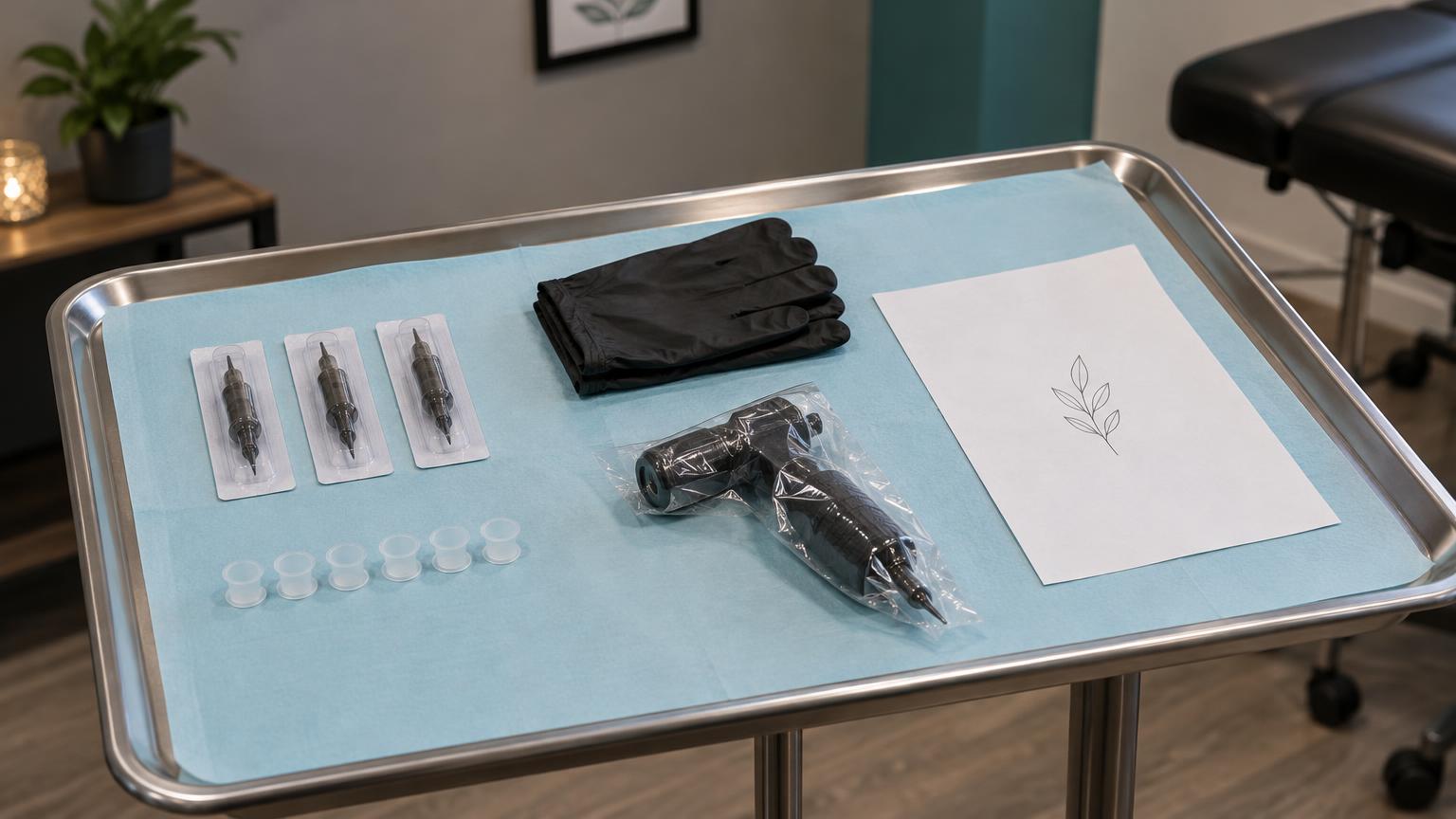
Ready when: you've settled on a design and spot you'll still want later, your skin has been checked if you're at higher risk, and the studio follows your local health rules.
Most of the work happens before the appointment: choosing the design and placement, checking your skin, and checking the studio. The tattoo is meant to last a lifetime, and the FDA says removal is slow, costly, usually takes several treatments and may leave a scar. The FDA calls allergic reactions to tattoo pigments rare, but reactions can show up right away or years later. This list follows guidance from the US Food and Drug Administration (FDA) and the American Academy of Dermatology (AAD), checked in November 2026. Rules for tattoo studios are set by states and local health departments, so they vary by where you live.
The Before List
- Pick a design and spot you'll still want in 20 years. Think about how ageing and weight changes might stretch it.
- Get a skin check if you're at higher risk. A dermatologist can look at your moles and spots first.
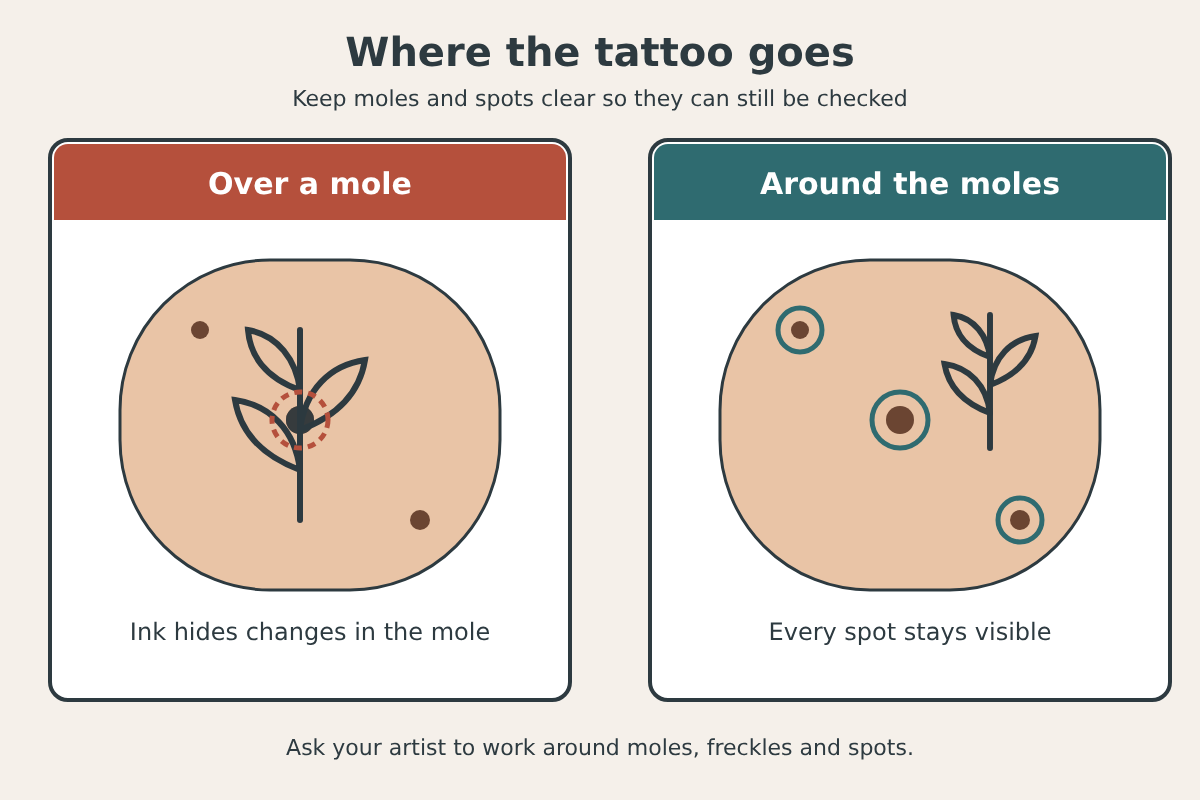
- Keep the tattoo off moles and spots. Ask the artist to work around them.
- Think twice if you form keloids or have a skin condition. Talk to a dermatologist before booking.
- Check the studio against your local rules. Your state or local health department oversees tattooing.
- Ask how needles and equipment are kept sterile. Needles should come from sealed packs.
- Skip home tattoo kits and DIY inks. The FDA links them to infections and allergic reactions.
- Write down the ink brand and colours. You'll need them if your skin reacts.
- Get the aftercare instructions before you leave. Ask how long the soreness should last too.
- Know the warning signs of infection. Spreading redness, worse pain, pus, fever or chills mean see a doctor.
Why each one matters
The design comes first because it's the part you can't easily undo. The FDA says permanent tattoos are hard to remove, and that removal can leave permanent scarring and may not clear the ink fully. Its fact sheet adds that body changes and shifting styles can make a tattoo look distorted or dated.
A skin check matters most for some people. The AAD suggests having a dermatologist examine your skin before you get a tattoo, especially if you have several unusual (atypical) moles, a personal or family history of skin cancer, or a weakened immune system. The dermatologist will look at your moles, freckles and age spots and tell you which areas they want to keep watching.
Placement around moles keeps skin cancer easy to spot. The AAD says the greater worry is that a tattoo can hide skin cancer, and that it's not yet known whether tattoos cause it. Ink can change how a mole's border and colour look, which makes melanoma harder to spot, and can make a biopsy harder to read. Its advice: choose skin without moles, and tell the artist to work around moles, freckles and other spots.
Keloids and skin conditions change the odds. A keloid is a raised scar that grows bigger than the wound that caused it, and the AAD says anyone who has had one should reconsider getting a tattoo. The FDA notes that people prone to keloids can form them from a tattoo. The AAD also says a tattoo can trigger a psoriasis flare in people who carry the genes for it. If you have eczema, psoriasis or another long-term skin condition, ask a board-certified dermatologist first.
The studio's rules are local. The FDA oversees tattoo inks as cosmetics, but the practice of tattooing is overseen by state and local authorities, so check what your state or city requires and whether the studio meets it. Your local health department can tell you. The FDA's fact sheet says that getting a tattoo at a facility your state doesn't regulate, or one that uses unsterile equipment or reuses ink, may keep you from donating blood or plasma for a while. If you give blood, ask your blood centre about its current rule.
Sterile equipment is about infection: the FDA says unsterile equipment and needles can spread diseases such as HIV and hepatitis, and skin infections such as staph. Watching the artist open sealed needles and pour fresh ink into new caps is a reasonable thing to ask for.
Ink can be a risk even in a good studio. The FDA says an ink can be contaminated even when the container is sealed or the label says sterile, and there's no sure way to tell without lab testing. It has not approved any pigment for injection into the skin, and it says home kits and DIY inks have been linked to infections and allergic reactions.
The ink details help if something goes wrong. If you react, the FDA suggests telling the artist so they can identify the ink and stop using it, and asking for the brand, colour and any lot or batch number. It's easier to note those on the day than to chase them later.
The AAD says most ink allergies are to one colour and red is often the culprit, though any colour can cause one, and reactions can start right away or years later.
Aftercare decides how well it heals. The FDA suggests asking the tattooist how to care for the area and how long any discomfort should last, so get that in writing and follow it. For the long run, the AAD suggests a water-based lotion if the tattooed skin feels dry (petroleum jelly can fade the ink), a broad-spectrum, water-resistant sunscreen of SPF 30 or more applied 15 minutes before going out and every two hours after, and no tanning beds or sunlamps.
Infection signs need quick action. The AAD says to see your doctor or a board-certified dermatologist right away if you have spreading redness, worsening pain, pus, fever or chills, and to see a dermatologist if tattooed skin changes in any way. Report a reaction to the FDA as well. If you ever need an MRI, tell the technologist about the tattoo: the FDA says swelling or burning during a scan is rare and usually brief, and it's not a reason to skip a scan your doctor recommends.
Mistakes people make
- Choosing a design on the spot instead of living with it for a while first.
- Tattooing over a mole because it fits the design.
- Booking with someone working from home with a kit bought online.
- Assuming a sealed ink bottle means the ink is safe.
- Leaving without written aftercare instructions or the names of the inks.
- Putting off a doctor's visit when the redness is spreading.
Ready check
- Are you sure about the design and spot, knowing removal may not work fully? If not, see item 1.
- If you have many moles or a history of skin cancer, has a dermatologist checked your skin? If not, see items 2 and 3.
- Does the studio meet your state or local health rules and use sealed needles? If not, see items 5 and 6.
- Do you have written aftercare instructions and know which signs mean see a doctor? If not, see items 9 and 10.
