Before you put up a Christmas tree: 10 things to check
Christmas is Friday, December 25, 2026. Keep the tree 3 feet from heat, water it daily, check every light string and switch off at night: the full checklist.
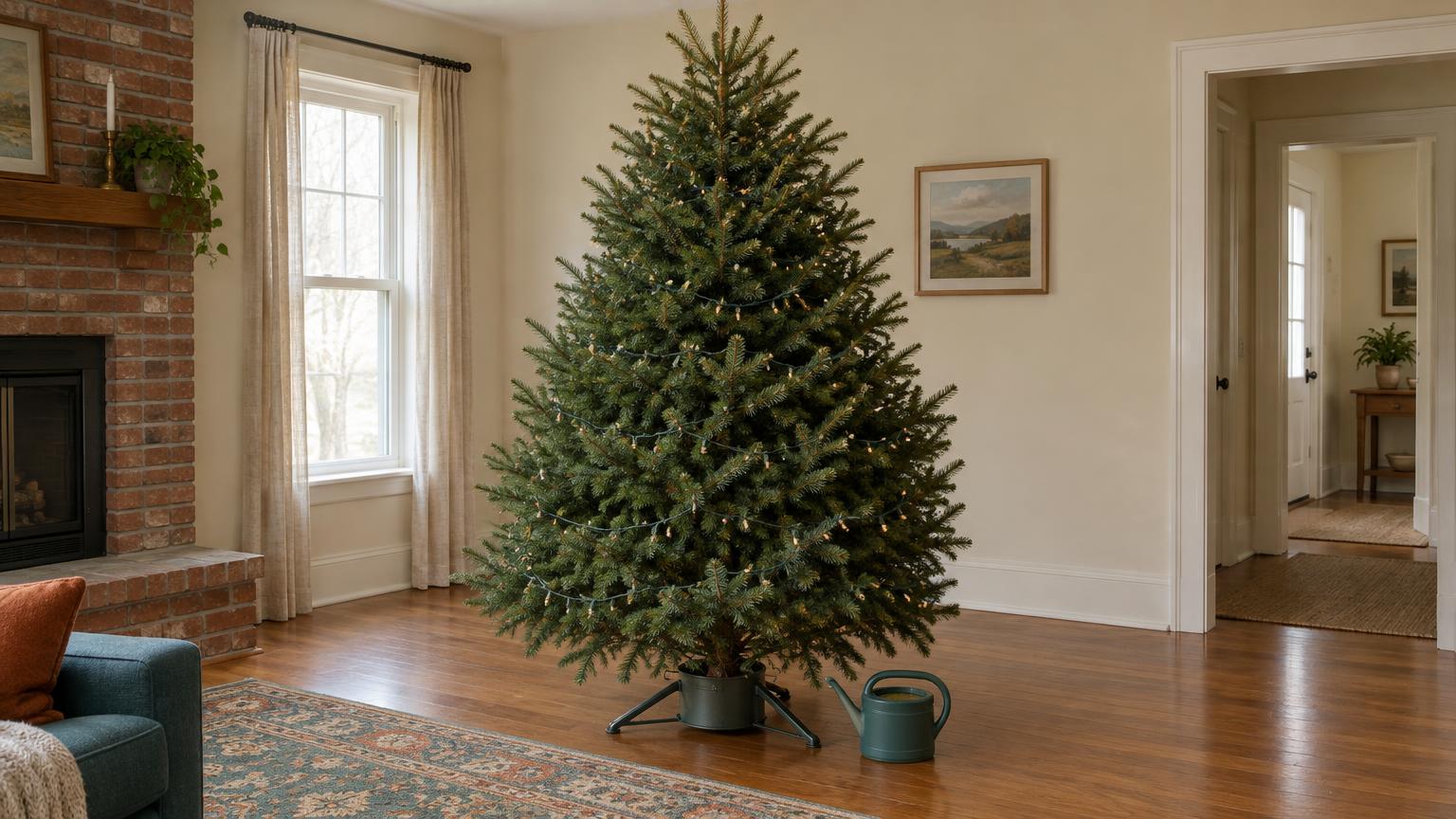
Ready when: your tree stands at least 3 feet from every heat source and clear of exits, the stand is full of water, and the lights are tested, undamaged and switched off whenever you go out or go to bed.
Christmas falls on Friday, December 25, 2026, so the tree you buy in early December has to stay safe for three weeks or more. Tree fires are rare, but they are fast. A CPSC test burn shown by NFPA, the US fire-safety association, has a dried-out tree reaching flashover, the point where a whole room ignites, in less than a minute, while a well-watered tree burns far more slowly. Between 2020 and 2024, US fire departments went to an average of 143 home fires a year that started with a Christmas tree; together they caused about 7 deaths, 13 injuries and $15 million in damage a year. This list follows NFPA's tip sheets and the US Consumer Product Safety Commission (CPSC), checked in November 2026. Local fire codes for trees in apartments and rentals vary, so check your lease or your local fire department too.
The Before List
- Pick a fresh tree. The needles should be green and stay on when you run a hand along a branch.
- Cut 2 inches off the trunk before it goes in the stand. A fresh cut lets the tree take up water.
- Measure 3 feet from every heat source. Fireplaces, radiators, heat vents, candles and lamps all count.
- Keep it out of the way of exits. The tree should never block a door or the path to one.
- Fill the stand and add water every day. Put it on your daily list, like feeding a pet.
- Buy an artificial tree labelled fire resistant. Look for the label before you pay.
- Use lights listed by a testing laboratory, indoors or out as marked. Some strings are made for one or the other, not both.
- Check every string and stay within the connection limit. Throw out frayed cords and loose bulbs, and follow the maker's limit for joined strands.
- Never put lit candles on or near the tree. Use flameless candles in the room instead.
- Turn the lights off when you leave or go to bed, and plan the tree's exit. A dry tree should leave the house soon after Christmas.
Why each one matters
A fresh tree buys you time. NFPA's test for freshness is simple: green needles that don't fall off when touched. A tree that sheds at the lot has already started drying, and it will only dry faster in a heated room.
The fresh cut matters because a trunk seals over once it's out of the ground. NFPA advises cutting 2 inches from the base just before the tree goes in the stand, so it can draw water.
Distance is the one rule to measure, not guess. NFPA's tip sheet says a heat source too close to the tree causes one in every four Christmas tree fires, and it sets the gap at 3 feet from fireplaces, radiators, candles, heat vents and lights. Pick the spot before you buy the tree, so you know how wide it can be. A space heater in the same room needs the same 3 feet of clear space, as the space heater checklist explains.
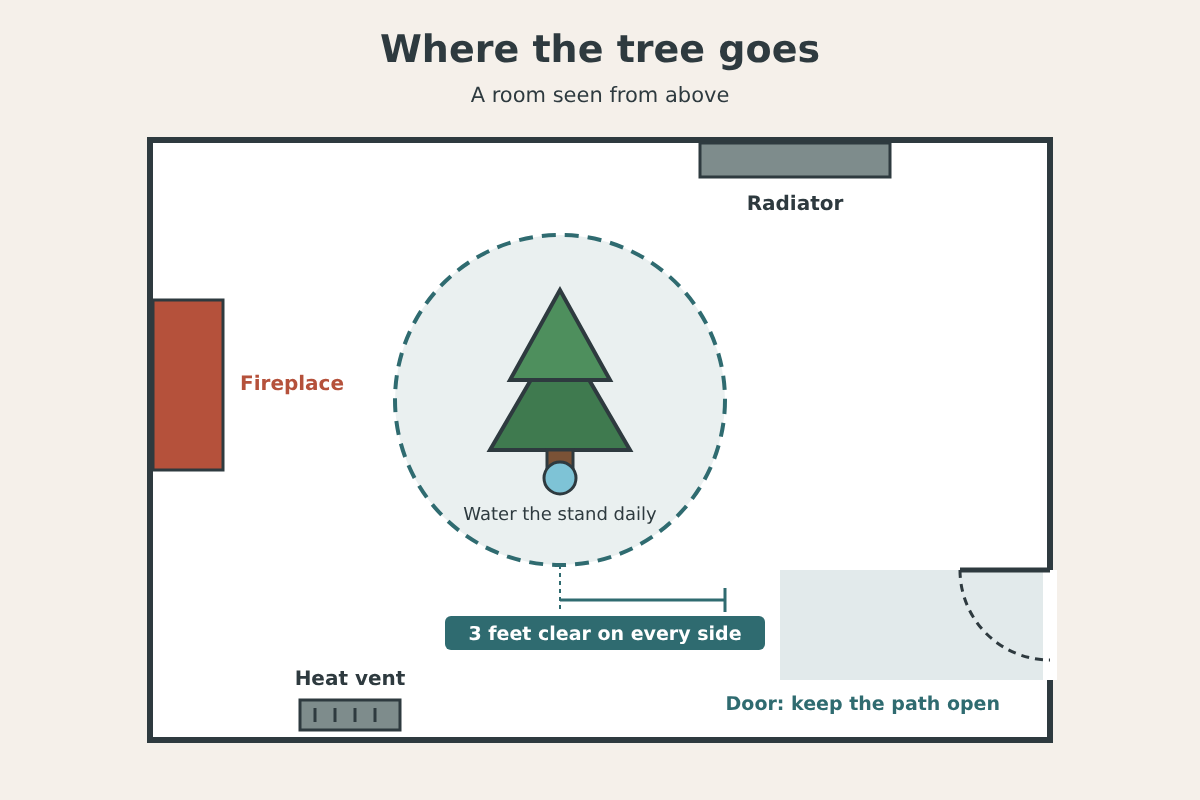
An exit matters because tree fires grow quickly. NFPA's guidance is that the tree should never block a way out, and its winter tip sheet adds a related step for the season: test your smoke alarms and tell guests about your home fire escape plan.
Water is the cheapest protection you have. NFPA says to add water to the stand every day, and CPSC gives the same first tip for live trees.
Artificial trees have their own check. CPSC advises looking for the "fire resistant" label when you buy one. It does not make a tree fireproof, so the 3-foot rule still applies.
Lights are where most of the risk sits. NFPA's tip sheet says electrical problems cause nearly half of home Christmas tree fires. Use strings listed by a qualified testing laboratory, and check whether each is rated for indoor or outdoor use. Before they go on the tree, look along each cord for cracks, fraying and loose bulb connections, and replace the string rather than tape it. NFPA says to follow the manufacturer's instructions on how many strands to connect; for older incandescent strings, CPSC's rule is never more than three sets together, and never overload an outlet. Hang lights with clips, not nails, so the cords aren't damaged.
Candles and trees don't mix. NFPA says never to use lit candles to decorate a tree. CPSC suggests flameless candles wherever possible, and never leaving a lit candle unattended.
Switching off is a habit worth starting on day one. NFPA advises turning off tree lights before leaving home or going to bed. A plug-in timer makes it automatic. If you're travelling for the holidays, the checklist for leaving your house empty covers the rest of the house.
Plan the tree's exit before it goes up. In NFPA's 2020 to 2024 figures, 35% of home Christmas tree fires happened in January, as trees dry out. Get rid of the tree after Christmas or as soon as it is dry, and don't leave it in the house, the garage or propped against the outside of the house. NFPA suggests checking with your community for a tree recycling program.
Countdown
4 weeks before
Choose the spot. Measure 3 feet from the fireplace, radiators and vents, and check the tree won't block a door. Note the width you have room for.
2 weeks before
Buy the tree. Check the needles, ask for a fresh cut, and get it into water the same day. Test every string of lights before it goes on.
The week before
Check the water level every day. Test your smoke alarms.
On the day
Keep candles well away from the tree, and turn the lights off when you go to bed. Find out how your town collects or recycles trees in January.
Mistakes people make
- Buying the tree first and finding the only spot is beside a radiator.
- Putting a tree in the stand without a fresh cut, so it never takes up water.
- Letting the stand run dry for a day or two over a busy weekend.
- Joining old light strings end to end until one outlet runs the whole room.
- Leaving the lights on overnight or while the house is empty.
- Keeping a dry tree in the garage until collection day.
Ready check
- Is the tree at least 3 feet from every heat source, and clear of exits? If not, see items 3 and 4.
- Is the stand full, and is someone checking it every day? If not, see item 5.
- Have you checked every string of lights and stayed within the connection limit? If not, see items 7 and 8.
- Are the lights off when the house is empty or asleep? If not, see item 10.
