Before you board your dog for the holidays: 10 things to check
Book early, tour first, check vaccine dates and do a trial stay: what to sort out before your dog boards over Christmas.
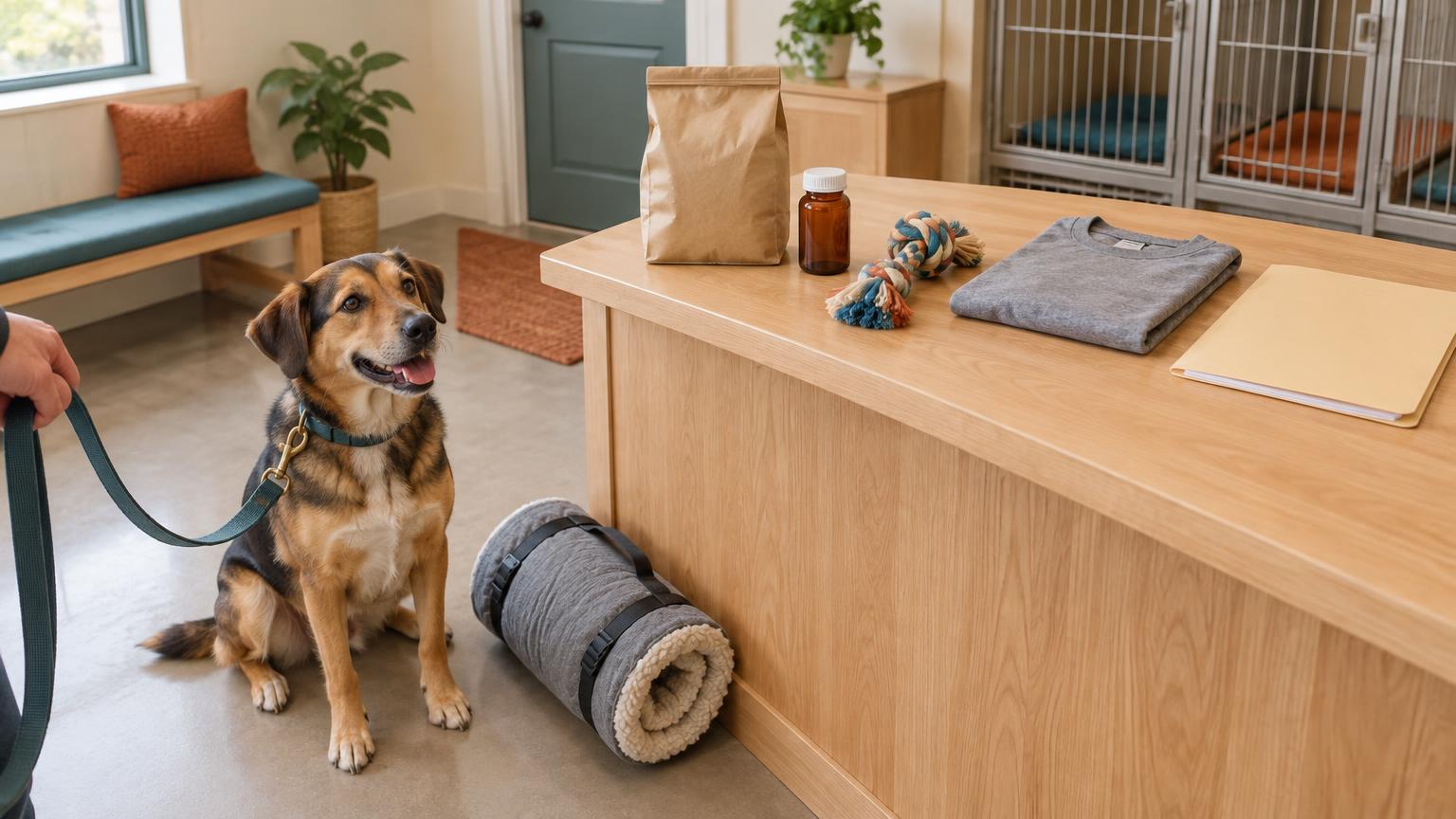
Ready when: your dog's spot is booked, its vaccine dates meet the kennel's rules, and you've toured the place in person.
If you're traveling for the holidays and your dog is staying behind, book a boarding spot this week. Christmas falls on Friday, December 25, and the American Kennel Club warns that good kennels and sitters are hard to find around the holidays. Five weeks is enough time to tour two or three places, catch up on vaccines and fit in a trial stay. This list draws on the AKC, the San Francisco SPCA, Cornell University's Riney Canine Health Center and UC Davis, checked in November 2026. Vaccine rules for kennels vary by state and by facility, so get each kennel's list in writing, and leave the choice of vaccines to your vet, who knows your dog and your area.
The Before List
- Book now. Hold a spot at your first choice while you check the others.
- Tour every place you're considering. Ask to see all the areas your dog would use, not just the lobby.
- Ask how a day runs. Play groups, time out of the kennel, the feeding schedule and who is there overnight.
- Get the vaccine list in writing. Then compare it with the dates on your dog's records.
- Book the vet now if anything is due. Bordetella, the usual kennel cough vaccine, should go in at least a week before boarding.
- Ask what happens in an emergency. Which vet they use, and when they call you.
- Do a trial stay. A day or a night shows how your dog copes before the long stay.
- Tell the staff everything. Medical conditions, medications, fears, separation anxiety and resource guarding.
- Pack what the kennel asks for. Usually your dog's own food, its medications, a toy and something that smells like you.
- Know the signs of kennel cough before pickup. A loud, honking cough is the classic one.
Why each one matters
Holiday weeks are when boarding is hardest to find. The AKC says good kennels and sitters are hard to find around the holidays, and that the sooner you search, the more options you'll have. Ask friends, neighbors and your vet which places they trust, then start calling.
A tour tells you more than a website. According to the AKC, a reputable kennel will let you see the dog runs, meet the staff, and see where meals are prepared and where dogs play. Its warning signs are a kennel that doesn't ask for vaccination records, overcrowding, little contact between staff and dogs, and staff who don't seem interested in your dog's needs. The San Francisco SPCA adds what to look at while you're there: cleanliness, ventilation, light and a comfortable temperature, bedding or resting boards that keep dogs off bare concrete, and latches and fences that would hold your dog. It suggests visiting twice and listening to how much barking there is, looking for a state or local license where one is required, and checking the Better Business Bureau for complaints.
The daily routine is what your dog actually lives through. The SF SPCA suggests asking whether attendants are there 24 hours a day, whether play groups are split by age, size and energy level, how many dogs each attendant watches during play, what training the staff have, and how they break up a scuffle. Ask whether you can bring your dog's regular food and whether the feeding schedule can change for special needs. The AKC suggests a simple test after you've heard about the activities: would you want to stay there?
Vaccine records are where bookings fall apart at the counter. The AKC notes that many states require kennels to keep proof of each dog's vaccinations, which prevents outbreaks of diseases such as parvovirus, rabies and distemper. Each kennel sets its own list, and Bordetella is a common one. Check the dates on your dog's records against the dates of your stay, and ask the kennel how recent each shot has to be.
Kennel cough is the illness boarding is known for. Cornell's Riney Canine Health Center describes bordetellosis, one cause of kennel cough, as a very contagious respiratory infection spread mainly by droplets from coughing and sneezing, and lists boarding, grooming and daycare facilities among the places it is more common. The vaccine can be given by mouth, in the nose or by injection. Cornell calls it non-core but highly recommended for dogs at risk, and it doesn't fully prevent infection: many vaccinated dogs show no signs after exposure, and others get milder ones. UC Davis advises vaccinating healthy dogs at least one week before boarding. If anything is due, book the vet in the next week or two so there's time to spare.
You want these answers before you need them. The AKC suggests asking whether a vet is on site or on call, which emergency clinic the kennel uses, how sick dogs are kept apart from the others and what cleaning is done each day. The SF SPCA suggests also asking what happens if your dog stops eating or just seems off; the kennel should contact you first. Leave your vet's number and a way to reach you while you travel.
A trial stay is the cheapest way to find out how your dog will do. The AKC says many kennels offer one and some require it, and staff use it to judge a dog's temperament and how it plays with others. Good signs afterward are a dog that comes home pleasantly tired, clean and relaxed around the staff, without heavy panting, drooling or a stiff body. If your dog comes back anxious, keep looking. A pet sitter who comes to your home is the other option the AKC suggests, and it suits dogs that don't do well around other dogs.
Staff can only plan for what they know. The AKC advises being open about separation anxiety, resource guarding and illnesses that need close watching, and asking whether staff can give medications and supplements and how they care for dogs with arthritis, allergies, diabetes or mobility problems.
What to pack depends on the kennel, and it should tell you before drop-off. The AKC lists your dog's food, a favorite toy, a piece of clothing with your scent and the dog's bed as common items. Write the medication doses and times on paper, so nobody has to remember them. If you're flying, the holiday flight checklist covers your side of the trip. And if you're thinking about a new dog this season, what to check before adopting a dog explains why the first days need you at home, not at a kennel.
Countdown
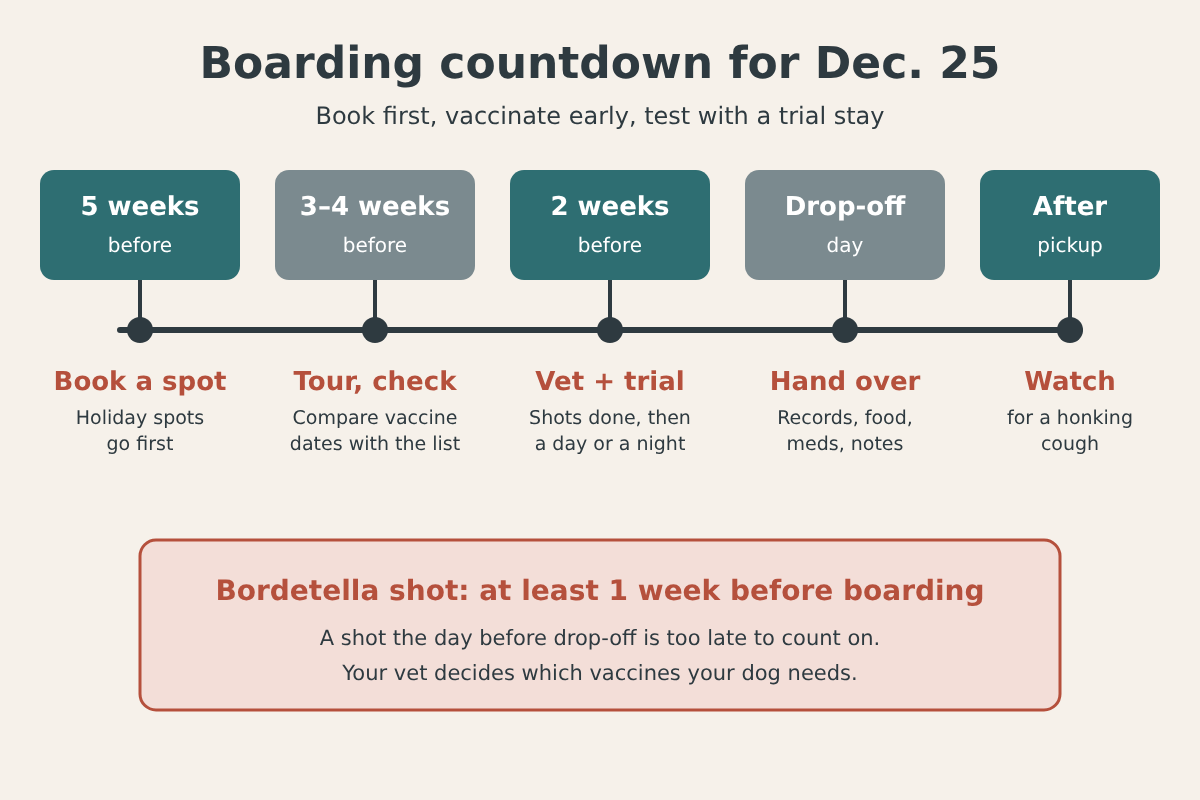
5 weeks before
Call kennels, book tours and hold a spot at the first good one. Ask for the vaccine list in writing, along with drop-off and pickup hours.
3 to 4 weeks before
Tour your shortlist. Check your dog's records against the kennel's list and book the vet if anything is due.
2 weeks before
Finish any vaccines your vet recommends, including Bordetella if the kennel requires it. Do a trial day or night.
The day before
Pack the food, medications with written instructions, a toy, a worn T-shirt, the bed if the kennel takes one, and copies of the vaccine records. Write down your vet's number and how to reach you.
On drop-off day
Hand over the records and instructions in person. Confirm the pickup time and what happens if your return is delayed.
After pickup
Watch for kennel cough over the following days. UC Davis describes a harsh, honking cough that ends in a retching noise, sometimes with runny eyes and nose in a dog that otherwise eats and plays normally. Call your vet if your dog is lethargic or off its food, or if a soft cough comes with fever, since that can mean pneumonia.
Mistakes people make
- Waiting until December to call. Holiday spots go first.
- Booking from photos without a tour.
- Getting the Bordetella shot the day before drop-off. UC Davis advises at least a week ahead.
- Checking that a vaccine is on the record but not its date.
- Leaving out a health or behavior problem so the dog isn't turned away. Staff can't plan for what they don't know.
- Skipping the trial stay for a dog that has never boarded.
Ready check
- Is a spot booked, with drop-off and pickup times confirmed? If not, see item 1.
- Have you toured the kennel and liked how the dogs are cared for? If not, see items 2 and 3.
- Do your dog's vaccine dates meet the kennel's list? If not, see items 4 and 5.
- Does the kennel know your dog's health, medications and quirks? If not, see items 6 and 8.
