Before you fly with a baby or toddler for the holidays: 10 things to check
Lap or own seat, an aircraft-approved car seat, and formula through security: what to sort out before a holiday flight with a little one.
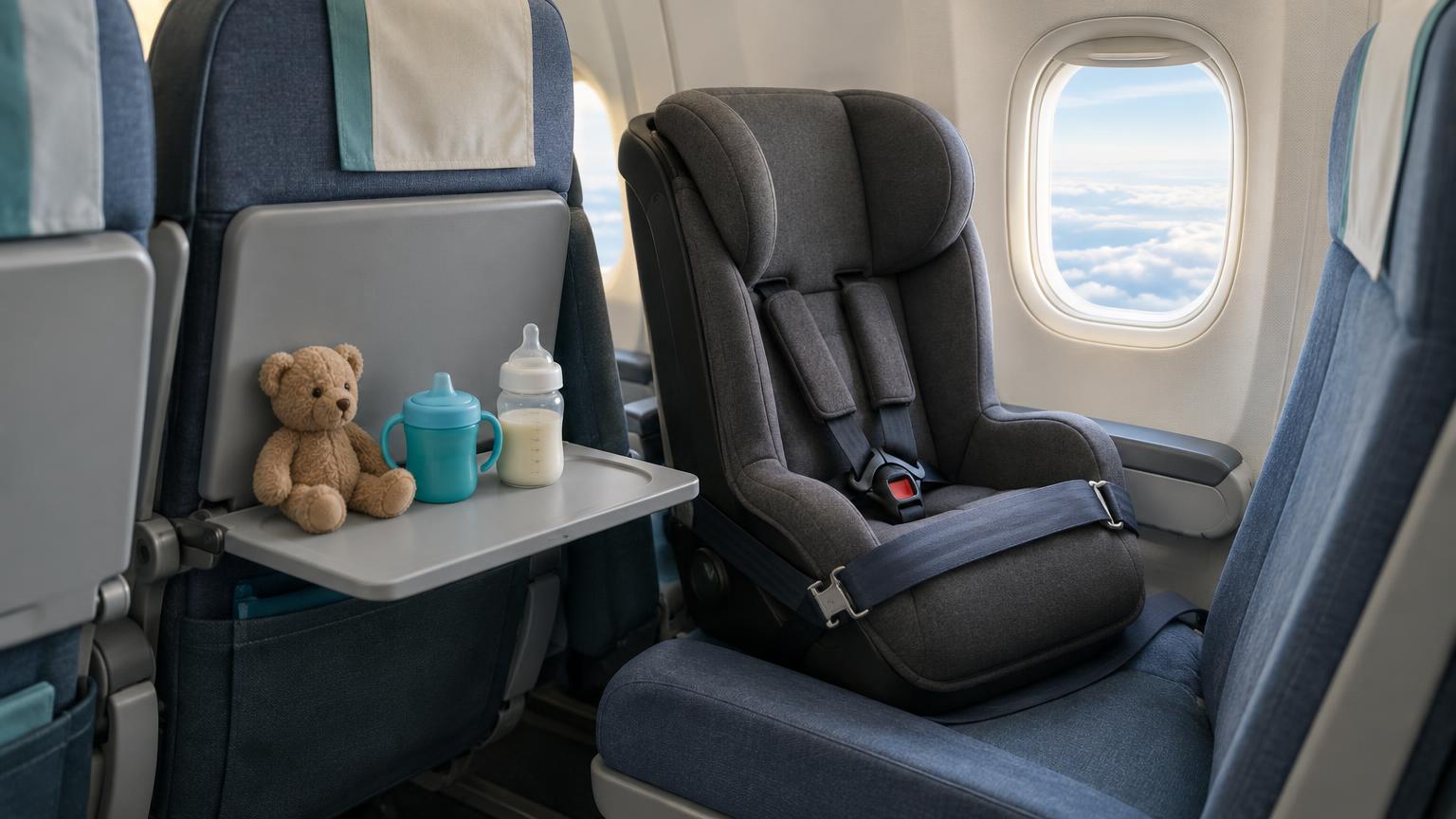
Ready when: you've decided lap or own seat for your under-two, your car seat is labeled for aircraft, and the formula or milk is packed to show at security.
If you're flying with a baby or toddler for Christmas, which falls on Friday, December 25, 2026, the decisions that matter most are made at home weeks before: whether your youngest gets a seat, which car seat comes along, and how you'll get the stroller, the seat and the milk through security. This list draws on the Federal Aviation Administration and TSA, checked in November 2026. Airline rules on lap children, car seats and IDs for young travelers vary, so confirm with your airline before you book and again before you fly. For the adult side of the trip (REAL ID, gift wrapping, refunds), see the holiday flight checklist.
The Before List
- Decide lap or own seat for a child under two. The FAA says the safest place is an approved child seat, not your lap.
- Book your seats together, early. Pick adjacent seats when you book, not at the gate.
- Check the car seat's label. It must say it's certified for use in motor vehicles and aircraft.
- Read the car seat manual for airplane use. If it can't be secured in an airplane seat, it may have to be checked.
- Consider a CARES harness for a bigger toddler. It's FAA-certified for children 22 to 44 pounds and up to 40 inches tall.
- Leave the booster seat for the hold. Boosters and baby carriers can't be used for taxi, takeoff or landing.
- Pack formula, breast milk and toddler drinks in your carry-on. More than 3.4 ounces is allowed; tell the officer at the start of screening.
- Plan the stroller and car seat through security. Both go through the X-ray, and your child is carried through in your arms.
- Ask your airline what ID or proof of age it wants for your child. TSA doesn't require ID for under-18s on domestic flights, but airlines set their own rules.
- Use the same car seat for the car rides at both ends. The FAA suggests buckling your child in for the drive to the airport and on arrival too.
Why each one matters
The lap-or-seat decision is a safety call as much as a money one. The FAA says the safest place for a child under two on a US airplane is an approved child restraint system or device for the whole flight, because in sudden turbulence your arms may not be able to hold a lap child securely. It cites a 2019 study from the National Institutes of Health finding that unrestrained lap children are prone to in-flight injuries, particularly during meal service or turbulence. Buying your child a ticket is the only way to guarantee a seat to put the car seat in. For children two and older a child seat isn't required, but the FAA strongly recommends one.
Booking early matters for families because you need adjacent seats, and a child's car seat has to go where your airline allows. The FAA notes that airlines may have rules about which seats a car seat can be installed in on each aircraft, so ask when you book.
Not every car seat can fly. The FAA says a hard-backed car seat must carry the printed label "This restraint is certified for use in motor vehicles and aircraft" (or the required marking from a foreign government that approved it). Check the label now, while there's time to buy or borrow a different seat. Then read the manual: it should confirm the seat can be secured properly in an airplane seat, and the FAA warns you may otherwise be asked to check it as baggage. The seat has to face the direction its label calls for your child's size.
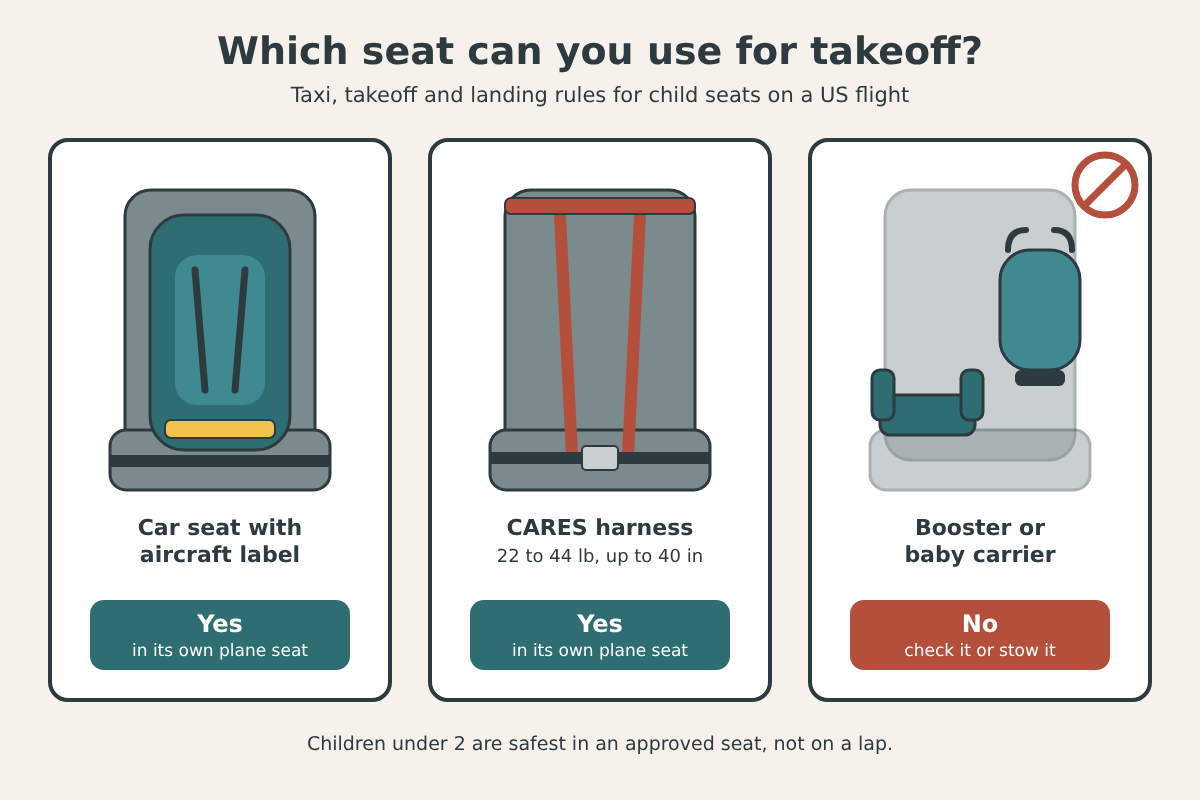
A CARES harness is the lighter option for toddlers who can sit up on their own. The FAA says the AmSafe Child Aviation Restraint System is certified for children up to 40 inches tall who weigh 22 to 44 pounds, sitting forward-facing in their own seat, and works with the aircraft seatbelt in all phases of flight. It's for aircraft only, so you'll still need a car seat on the ground. The FAA warns about counterfeit versions sold online and suggests buying directly from the manufacturer; an approved one carries an "FAA Approved in Accordance with 14 CFR" label.
Boosters stay in the bag. The FAA prohibits using booster seats, baby carriers and backless child seats during ground movement, takeoff and landing. If a booster is the seat you need at your destination, check it or carry it on to stow.
Milk and formula are the liquids exception that holiday rules don't change. TSA allows formula, breast milk and toddler drinks in carry-on bags in amounts over 3.4 ounces (100 mL). Take them out and tell the officer at the start of screening that you have them.
Security has its own routine for children. TSA says strollers, umbrella strollers, baby carriers, car and booster seats and backpacks all go through the X-ray, and anything too big for the machine gets a visual or physical inspection. Take your child out of the stroller or car seat and carry them through the metal detector; you can wear a baby in a sling or carrier, but that may mean extra screening. Children 12 and under can keep their shoes, light jackets and hats on.
IDs for children are an airline question. TSA doesn't require children under 18 to show ID on flights within the US, and tells families to check with the airline about its own requirements. Ask what it needs to see for a lap child or a teenager flying with you.
The car seat earns its place at both ends. The FAA suggests buckling your child into the car seat for the ride to the airport, on the plane and at your destination. If your approved seat doesn't fit the airplane seat you were given, the FAA says the airline is responsible for finding another seat in the same class for it.
Leaving the house for a week or more? Run through what to check before leaving your house empty for the holidays the day before you go.
Countdown
5 weeks before
Decide whether your under-two gets a seat. Book flights and choose seats together, and ask the airline where a car seat can go and what ID it wants for your child.
3 weeks before
Check the car seat label and manual. If it isn't approved for aircraft, or your toddler fits a CARES harness better, order one now from the manufacturer.
The week before
Practice folding the stroller and carrying the car seat. Pack the carry-on with formula or milk where you can reach it, and move any booster seat to the checked bag.
On the day
Buckle your child into the car seat for the drive. At the checkpoint, take out the formula or milk, tell the officer, put the stroller and seat on the belt and carry your child through.
At the gate
Ask the gate agent to confirm your seats are together. If the car seat doesn't fit the seat you were given, ask for another seat in the same class.
Mistakes people make
- Assuming any car seat can fly. Look for the aircraft wording on the label before you leave home.
- Planning to use a booster seat for taxi, takeoff or landing.
- Packing all the formula in the checked bag. It's allowed in your carry-on in amounts over 3.4 ounces.
- Not telling the officer about milk or formula until the bag is already in the X-ray.
- Buying a CARES lookalike from a third-party seller.
Ready check
- Have you decided lap or own seat, and booked seats together? If not, see items 1 and 2.
- Does your car seat say it's certified for aircraft, or do you have a CARES harness? If not, see items 3 to 5.
- Is the formula, breast milk or toddler drink in your carry-on, ready to declare? If not, see item 7.
- Do you know what ID your airline wants for your child? If not, see item 9.
