Before you leave your house empty for the holidays: 10 things to check
Heat at 55°F, mail on hold, water off or a neighbor on call: what to sort out before your house sits empty over Christmas.
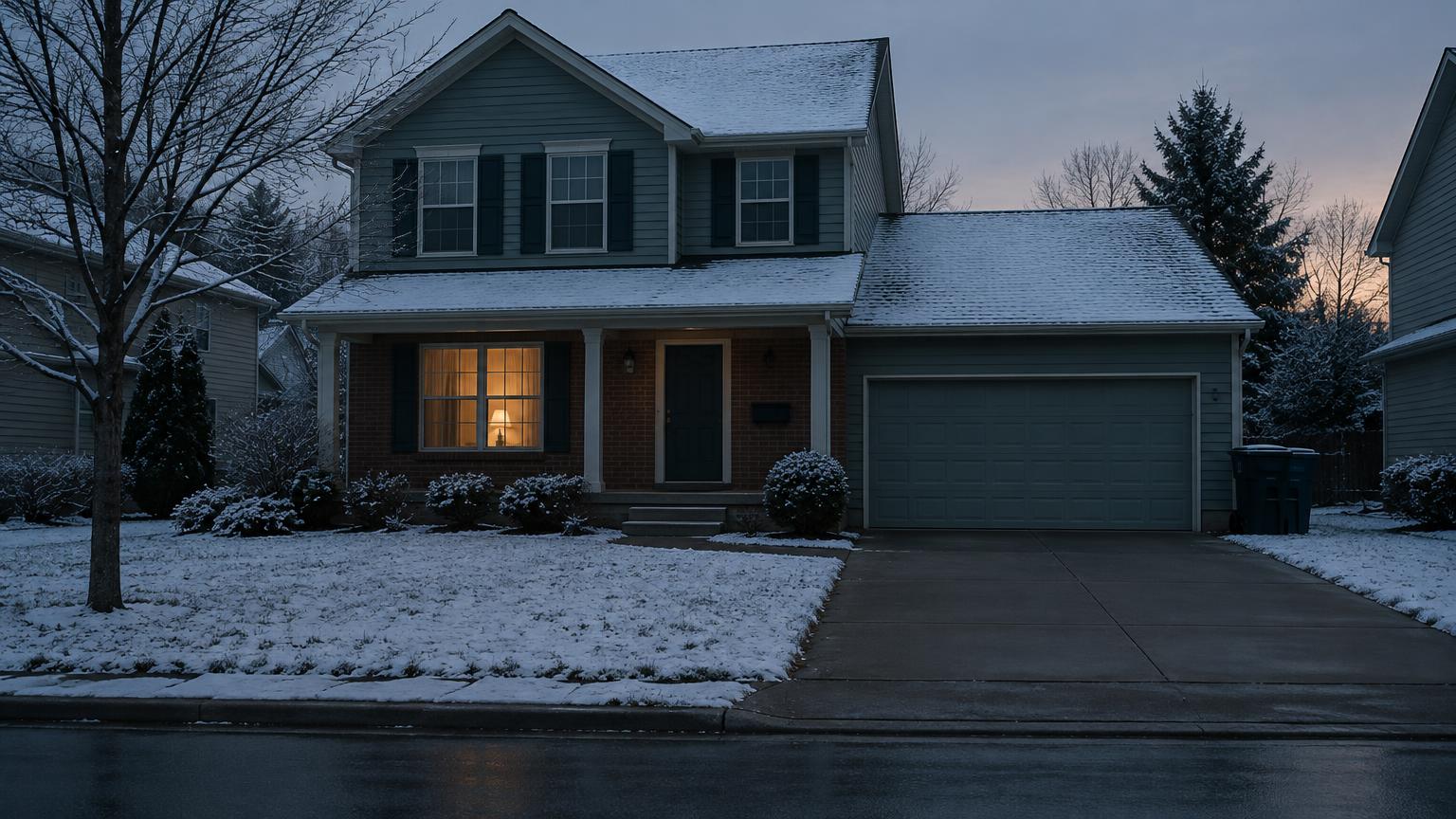
Ready when: the heat is set to at least 55°F, your mail is on hold, the water is shut off or a neighbor can check on the house, and every door and window is locked.
If you're away over Christmas, which falls on Friday, December 25, 2026, your house sits empty during the coldest, darkest weeks of the year. The two things most likely to go wrong are a frozen pipe that bursts and a house that looks unoccupied. Both are cheap to prevent if you start a few weeks out. This list draws on the US Postal Service, the American Red Cross, Travelers Insurance, the Texas Office of Public Insurance Counsel and a local police department's vacation-watch advice, checked in November 2026. Insurance terms and police services vary by policy, state and town, so confirm the details with your own insurer and police department.
The Before List
- Read your homeowners or renters policy for absence rules. Look for what it says about heat, frozen pipes and how long the home can be empty.
- Line up a neighbor or friend on call. Someone who can bring in bins and packages and get inside if a sensor or alarm goes off.
- Ask your police department about a vacation watch. Many offer extra patrols while you're away.
- Hold your mail. USPS Hold Mail keeps it at your Post Office for 3 to 30 days.
- Put lights on timers. Interior lights on for a few hours each evening, motion lights outside.
- Find your main water shutoff and the valves to your appliances. Then decide whether to close the main before you leave.
- Keep the heat on, at 55°F or higher. Never turn it off to save money while you're gone.
- Don't start the dishwasher or washing machine on your way out. Run them while you're home and awake.
- Unplug electronics that don't need power. It cuts the risk of an electrical fire and a little off the bill.
- Lock every door and window, and keep the trip off social media. Share photos when you're back.
Why each one matters
Your policy is where a frozen pipe turns from a repair into a bill you pay yourself. The Texas Office of Public Insurance Counsel warns that a homeowners policy may not cover damage from frozen or broken pipes if you don't keep the home heated, and that most policies have an absence exclusion; its example is a policy that won't cover theft or vandalism after 60 days away. A holiday trip is usually well short of that, but read your own policy and call your agent if anything is unclear.
A neighbor on call does what no gadget can. Travelers suggests having someone ready to respond if a leak sensor goes off, and Westfield, Indiana's police department suggests asking a trusted friend to watch the house, put the garbage out on collection day and switch different lights on and off. Give them a key, your phone number and the location of your water shutoff.
Police vacation watches are common but not universal. In Westfield, officers make extra patrols as time permits and contact you or your emergency contact if they find a problem, and the department notes that active calls come first. Call your own department's non-emergency line or check its website to see whether it offers the same.
A pile of mail is the clearest sign nobody is home. USPS Hold Mail holds your mail at your local Post Office for a minimum of 3 days and a maximum of 30. You can request it up to 30 days in advance, and the request has to be in by 3 a.m. Eastern (midnight Pacific) on the day you want the hold to start. Online requests need a USPS.com account and a one-time identity check, so set that up early rather than the night before you leave. For more than 30 days, USPS points you to its forwarding service instead. Ask your neighbor to pick up packages from other carriers.
Lights make the house look lived in. The Texas OPIC suggests a timer that turns interior lights on for several hours each evening and motion-sensing lights outside, and Westfield's police suggest putting security lights on a timer too.
Water is the expensive one. Travelers says most water damage in homes comes from leaks in pipes and connections, and a leak in an empty house can run for days. Before you go, find the main shutoff and the supply valves for the washing machine, dishwasher, toilets and sinks. For a longer trip, Travelers suggests shutting off the main valve, or at least the valves to individual appliances, and talking to a plumber before you close the main for the first time. The Texas OPIC suggests draining the pipes as well, so that if one breaks, only the water left in the lines can escape. If you have a sump pump, Travelers suggests testing it and making sure the pit is clear.
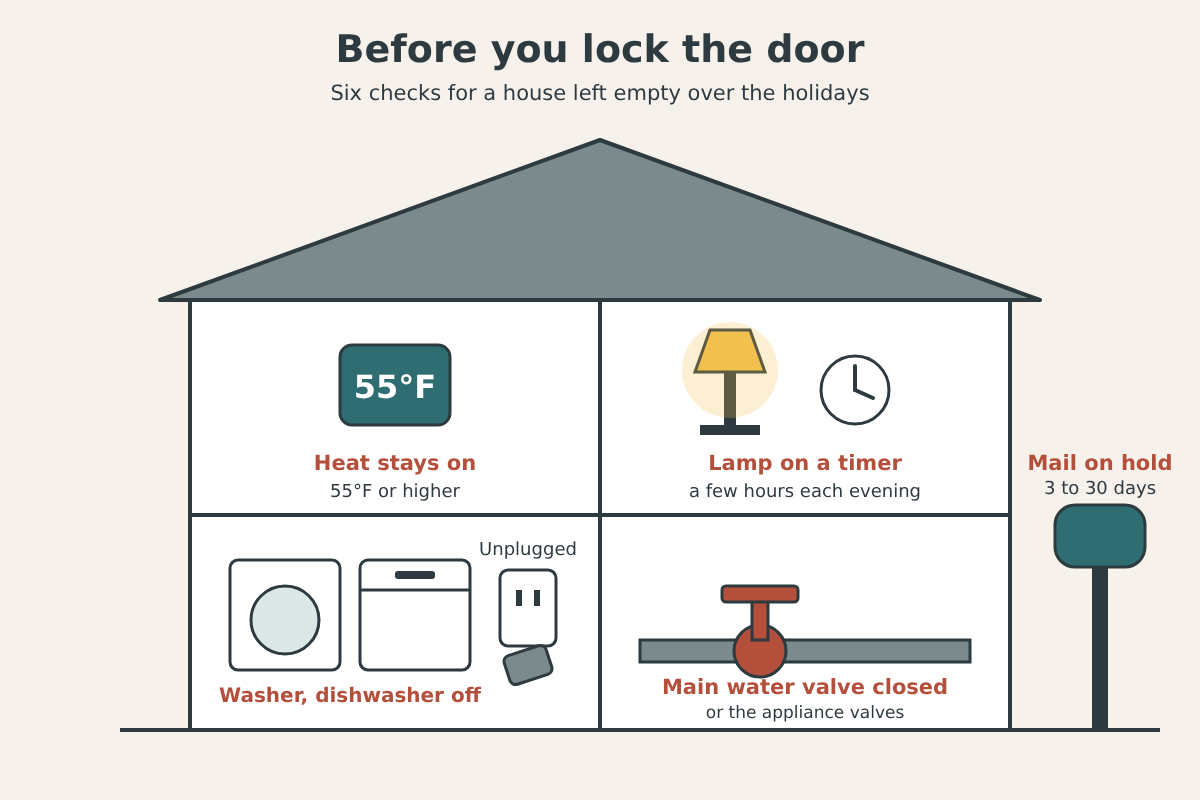
The heat stays on even if the water is off. Travelers says pipes in exterior walls can freeze if the heat isn't kept up, and recommends 55°F or higher so the wall and floor spaces around the pipes stay above freezing. The American Red Cross gives the same floor: leave the heat on, no lower than 55°F. Before cold weather sets in, the Red Cross suggests disconnecting garden hoses and closing the inside valves that feed outdoor faucets, and in a cold snap it suggests opening kitchen and bathroom cabinet doors so warm air reaches the pipes.
Appliances fail while they run. Travelers compares a dishwasher or washing machine to an oven: you wouldn't leave one on as you walk out the door.
Unplugging is a small step with two payoffs. The Texas OPIC suggests unplugging electronics that don't need power while you're gone, to lower the risk of an electrical fire and save a little energy. Leave the fridge, the furnace, the sump pump, the timers and any alarm or camera plugged in.
Locks and silence close the last gaps. Check every door and window, and set the alarm if you have one. Westfield's police suggest not sharing trip details on social media, turning off location sharing in apps and waiting until you're home to post photos, since friends of friends can often see them. They also suggest keeping an inventory of valuables, with serial numbers and photos, in case you need to make a claim.
If you're flying, the holiday flight checklist covers the airport side of the trip, and if the dog is staying behind, what to check before boarding your dog has its own countdown. Driving instead? Read the winter driving checklist before you set off.
Countdown
4 weeks before
Read your insurance policy's rules on heat and absence, and call your agent with questions. Ask a neighbor to be on call and check whether your police department offers a vacation watch.
2 weeks before
Buy light timers and test them. Find the main water shutoff and the appliance valves, and call a plumber if you've never closed the main. Set up your USPS.com account for Hold Mail.
The week before
Request Hold Mail for the dates you're away. Sign up for the police vacation watch if there is one. Give your neighbor a key, your contact details and your return date. Test the sump pump.
The day before
Run the dishwasher and washer while you're home. Empty the fridge of anything that will spoil, take out the trash, and unplug electronics you won't need.
On the day
Set the thermostat to 55°F or higher. Close the main water valve, or the appliance valves, if that's your plan. Lock every door and window, set the alarm and check the timers are on.
Mistakes people make
- Turning the heat off to save money. Pipes in outside walls can freeze, and your policy may not cover the damage.
- Starting the dishwasher or a load of laundry on the way out the door.
- Closing the main water valve for the first time on the morning you leave. Find it and try it a week or two ahead.
- Forgetting that Hold Mail tops out at 30 days, and that packages from other carriers still arrive.
- Posting trip photos in real time.
Ready check
- Is the thermostat set to at least 55°F, and is the heat staying on? If not, see item 7.
- Is your mail on hold and someone collecting packages? If not, see items 2 and 4.
- Is the water shut off, or is someone checking the house? If not, see items 2 and 6.
- Are all doors and windows locked, with lights on timers? If not, see items 5 and 10.
Sources
- US Postal Service: Hold Mail
- American Red Cross: Frozen pipes
- Travelers: Best practices to protect your home from water while you're away
- Texas Office of Public Insurance Counsel: 10 ways to keep your home protected while traveling for the holidays
- Westfield, Indiana Police Department: Vacation watch safety tips
